

Artist: Hayden Wilson
Passion Artist
Meet Hayden Wilson
Hayden Wilson is a photorealistic oil painter who received her Bachelors of Fine Arts from Clemson University. She has been a professional painter for over a decade, and her paintings of landscapes and wildlife are filled with fine detail and hyper-satured colors that push the boundaries between realism and expressionism. Hayden hopes that her paintings provide viewers with a moment to contemplate creation- whether artistically or divinely- and appreciate the structures, colors, and forms that connect humans to the natural world.
Locally, her works are featured at The Gallery at Sweetgrass and have been exhibited at Robert Lange Studios and the Customs House Museum in Clarksville, Tennessee. To learn more about Hayden and see some of her work, you can check out her website: https://www.haydenwilsonart.com/
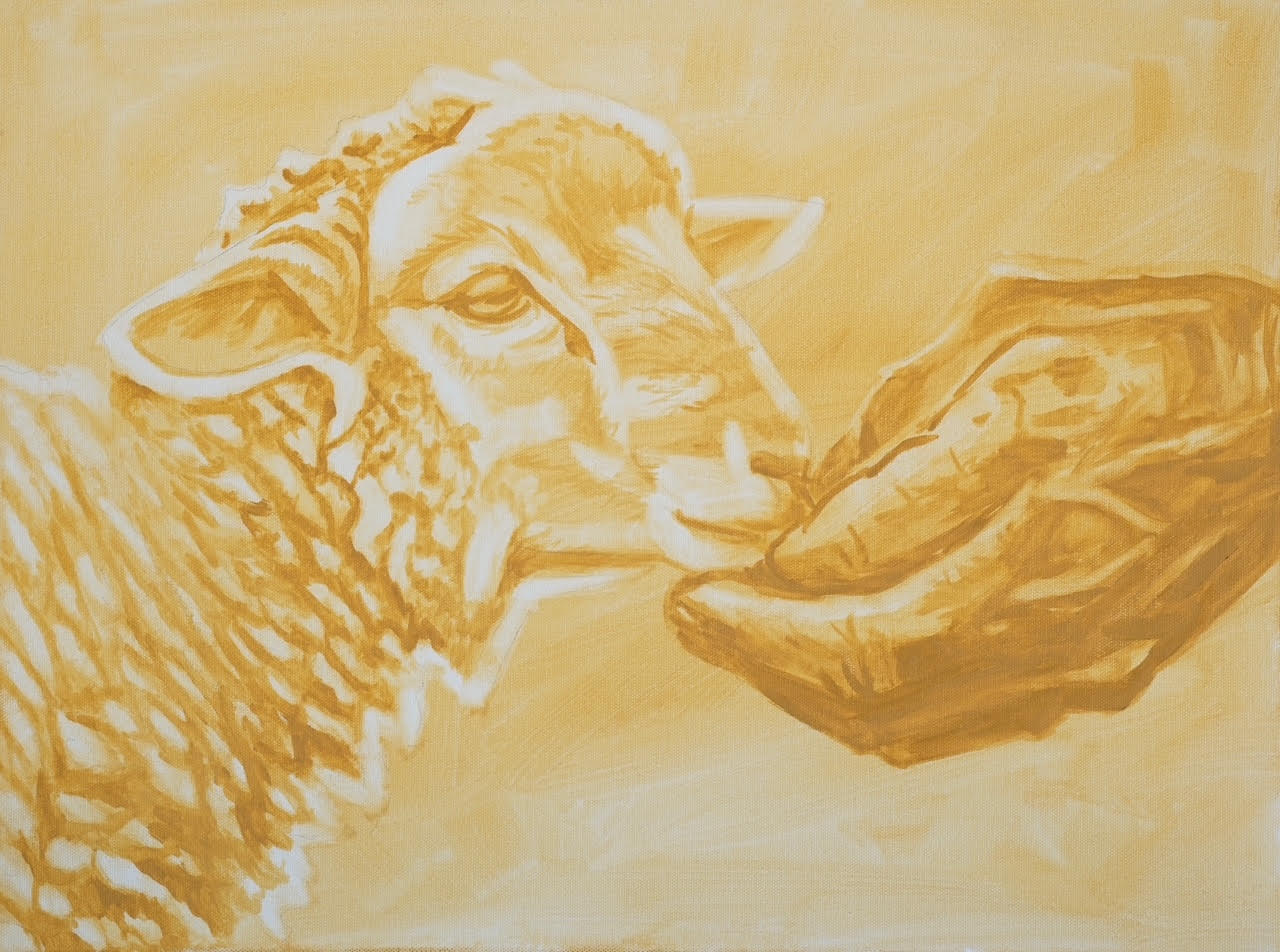
Jesus Dies On The Cross (A) (Matthew 27.45-50; John 19.28-30) Now from the sixth hour there was darkness over all the land until the ninth hour. Jesus, knowing that all was now finished, said “I thirst.” A Jar full of sour wine stood there, so they put a sponge full of the sour wine on a hyssop branch and held it to his mouth. When Jesus had received the sour wine, he said, “It is finished”. Jesus cried out with a loud voice, saying, “Eli, Eli, lema sabachthani?” that is, “My God, my God, why have you forsaken me?” He cried out again with a loud voice and yielded up his spirit.
While the process of oil painting is broken down into far more steps than A, B, and C, we can certainly dissect the steps of creating a painting into “beginning, middle, and end” as an artist paints an image. The first step is tonal: it lays a framework, it can be brief and it can be bleak, but it is most integral to establish a foundation to the structure of the final piece. It’s often the first step in the painting process when paint reaches the canvas, but it is not the first step in the overall artistic process. The artist has conducted research ahead of time, and years of experience has been dedicated to the craft. There may be background and narrative that suggests personal implications of the artist’s connections to the painting, or maybe the artist is creating a study for artistic exercise of technique or skill. Here, we aren’t sure if the final result will be one of story-telling through subject matter, or simply where the artist is painting for more for practice or fun. Is the focus on the image being created, or more about the painting process itself?
Likewise for this scripture, this is the first in a sequence describing the death of Jesus, but many events have led to this point- not just immediately, but historically. We just cited multiple references of Psalm 22, which is the most frequently quoted Psalm in the New Testament, as Jesus dies on the cross. As the ancient scripture is fulfilled in the savior’s death on the cross, we begin to see the evidence of a plan unseen. The sad cries of a dying, innocent savior are echoed in the colorless, drab painting of sheep. As the traditional Passover sacrifice is a sheep, Christ our savior also died for our sins.
Those familiar with the Psalm may realize that the scripture Jesus is referencing is one that ultimately goes on to rejoice in a God that is faithful and near, and will soon be resurrected; and those familiar with the painting process may also realize that this is just an underpainting- these ideas together indicate that God is at work to fulfill a much richer plan: one that came with study, sacrifice, and love.
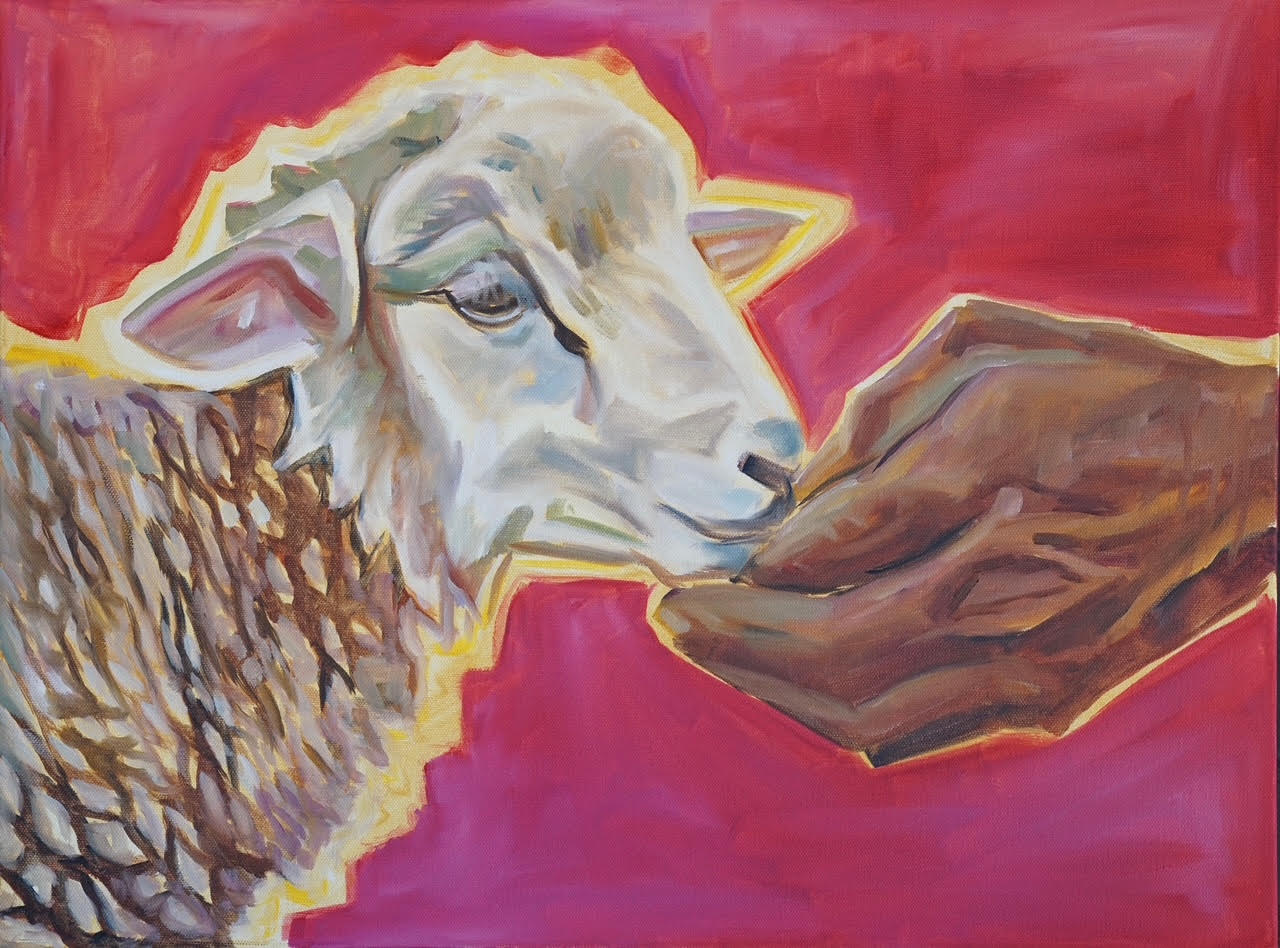
Jesus Dies On The Cross (B) (Luke 23:44-49) It was now about the sixth hour, and there was darkness over the whole land until the ninth hour, while the sun’s light failed. And the curtain of the temple was torn in two. Then Jesus, calling out with a loud voice, said, “Father, into your hands I commit my spirit!” And having said this he breathed his last. Now when the centurion saw what had taken place, he praised God, saying, “Certainly this man was innocent!” And all the crowds that had assembled for this spectacle, when they saw what had taken place, returned home beating their breasts. And all his acquaintances and the women who had followed him from Galilee stood at a distance watching these things.
Here, the scriptures continue to tell the story of a savior who not only dies, but whose innocence was evident to the people who killed him and who witnessed his death. The Bible is direct and poignant to declare that there were witnesses to this account so to establish validity, and likewise, so has our painting has built up detail: we can see more colors, and there’s a bold background- strong and assertive like the statement of his innocence, and like the colors in the temple veil. As readers of this biblical story, we see that Jesus’s last words were also in fulfillment of scripture (Psalm 31:5) as he breathed his last breath, committing his spirit in the Father’s hands and being in complete control of his body. He could have simply surrendered to death and given up, but in order to make even FURTHER believers out of us, he continued to quote the prayer of David as he commits his life to the Lord.
As believers, we know this isn’t the end of the story; but if we are new to this concept of death, sin, and evil being defeated (or depending on our relationship with our faith or have doubts in its validity) we may look at this story and wonder what is to come (because we can see that there’s still so much of the Bible left to read). Likewise with this painting, we may think “is this done? Is this good? It’s certainly more developed from Step 1, it’s more colorful, it has more detail, it’s almost there..” but those of us who really know painting techniques (or even know the artist’s personal style) can realize it’s far from the complete, and we can expect there’s more to be conquered.
But what happens when we look at this painting on its own, without any prior knowledge or concept? Is it compelling? If you have any questions, as I’d hope you should, you may want to know how we got here. There must have been a something that came earlier, and surely there’s more to come. Likewise in this scripture, you could reference all of the biblical and historical texts and studies that are widely available and essentially irrefutable and realize that there’s absolutely more to come because it’s far too critical and pivotal to have ended here.
Or, more simply, you could see one that shows that Jesus, an innocent man, died on the cross; crowds witnessed it, and it had a chasmic effect on the earth, just like the loud shift in color and contrast we just experienced as seen in the details developed and bright background.
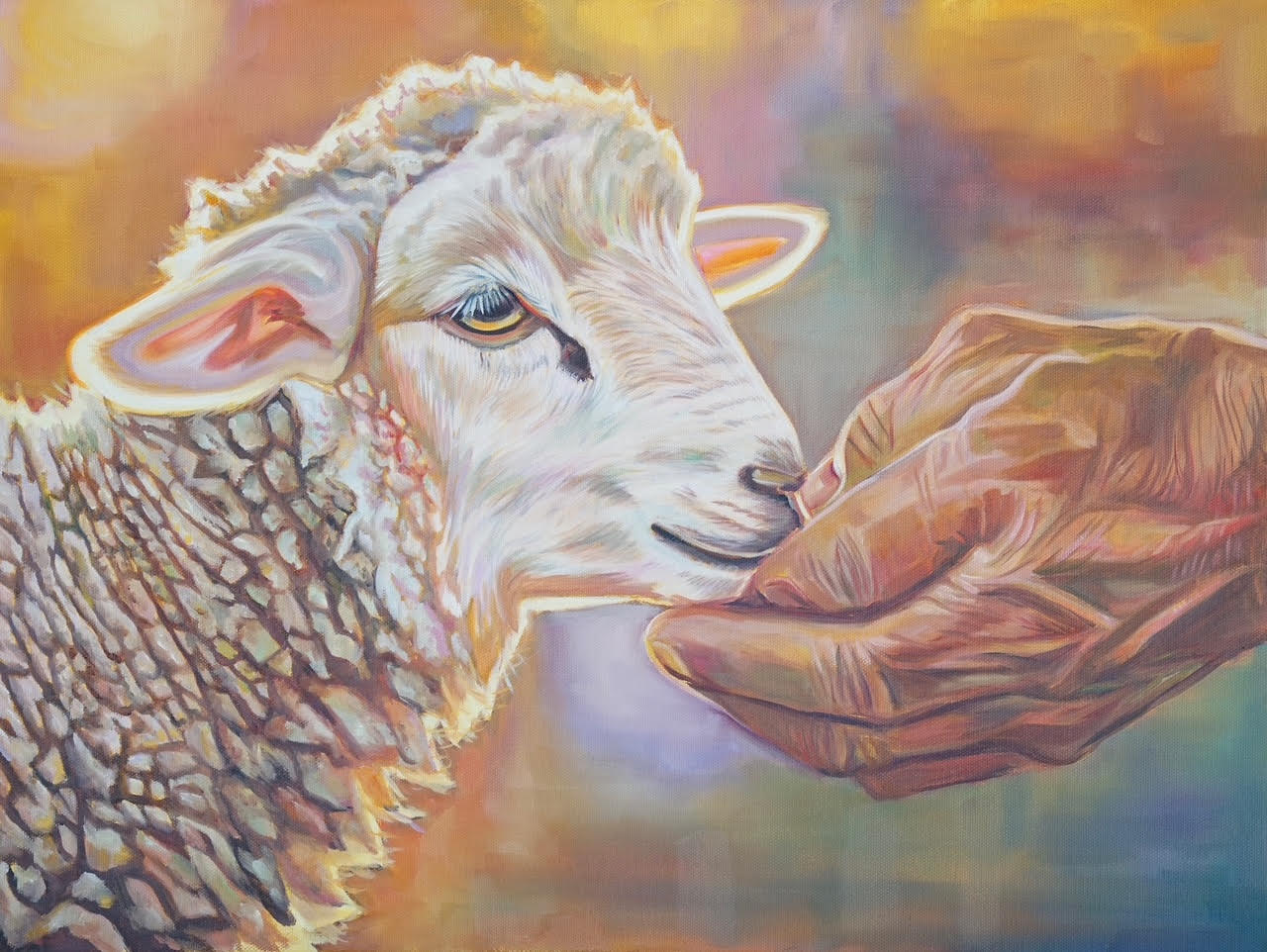
Jesus is pierced in the side (John 19.31-37) Since it was the day of Preparation, and so that the bodies would not remain on the cross on the Sabbath (for that Sabbath was a high day), the Jews asked Pilate that their legs might be broken and that they might be taken away. So the soldiers came and broke the legs of the first, and of the other who had been crucified with him. But when they came to Jesus and saw that he was already dead, they did not break his legs. But one of the soldiers pierced his side with a spear, and at once there came out blood and water. He who saw it has borne witness—his testimony is true, and he knows that he is telling the truth—that you also may believe. For these things took place that the Scripture might be fulfilled: “Not one of his bones will be broken.” And again another Scripture says, “They will look on him whom they have pierced.”
Upon seeing the revelation of the final painting, a person may wonder “where does this multicolor background come from, or why is it so different from the previous step, what is the significance?” The story and importance of Jesus’s death on the cross is just that- one of wonder- yet also with assertions of truth- that call us to be curious of the meaning and implications on our lives.
This scripture is full of punctuations and statements asserting “this happened, and here’s why”… and cause and effect, and of proof and witness. Just as the various colorful lights accentuate the background, so do the words “truth,” “belief,” “witness” and “testimony” in this passage.
So what if you hear this passage and think it’s simply a story? The Bible makes clear to mention the rituals of Roman law in Jesus’s death and burial, furthering the point that Jesus experienced his life under man’s law and was fully human.
Just as every detail in the scriptures perfectly broaden and deepen the historical and biblical significance of Jesus’s death on the cross, so do the details of this artwork fulfill and finalize the painting. The details within the hands, the careful tufts of wool, and each strand of hair on the face so mark the love of God for us (as he has referenced in scripture that every hair on our head has been counted, and that we are loved and valued). The glowing halo around the Holy lamb and the rugged, raw hands of a man, perhaps a worker or a servant, represent the dichotomy of a Jesus who was both God and man; who was a sacrifice. The finality of the painting illustrates that God’s plan of sacrifice has been made complete, and no longer can we see the painting’s underneath, as we now have hope in the coming resurrection and the forgiveness in our sins.
And lastly, what is our relationship with the subjects? What do we think about reaching for the sheep? What does God tell us about finding the one who strayed? Are we meant to follow a herd or seek the lost? Are we meant to lead with authority or tenderness?
Now given all the we know, that the God who so loved the world that he created mountains, the stars, the tides, the landscapes and the animals- chose to create US so that we may dwell with him in the glory of his creation- how do we feel about his plan for our lives as individuals, as a community, as a universe? Can’t we see that there’s enough scripture to support that our lives AND futures have been carefully crafted and designed? How does that affect our attitudes not just about our own anxieties or fear, but also in our love, our gratitude, and concern for all of God’s children?

Artist: Ryan Finley
Passion Artist
Meet Ryan Finley
Ryan Finley is a multidisciplinary artist specializing in murals and custom fine art for both commercial and residential spaces. In every medium, she strives to create pieces that feel timeless, warm, and rich with story. “At my core,” she says, “I love connecting with people. Without building relationships through my art—hearing what resonates with others and what inspires them—painting loses much of its purpose for me. Faith plays a central role in the inspiration behind my work, and it’s incredibly precious to me that we are created by the Creator to create.”
To learn more about Ryan and see some of her work, you can check out her website: Finley Art LLC @rc.finleyart | rcfinleyart.com
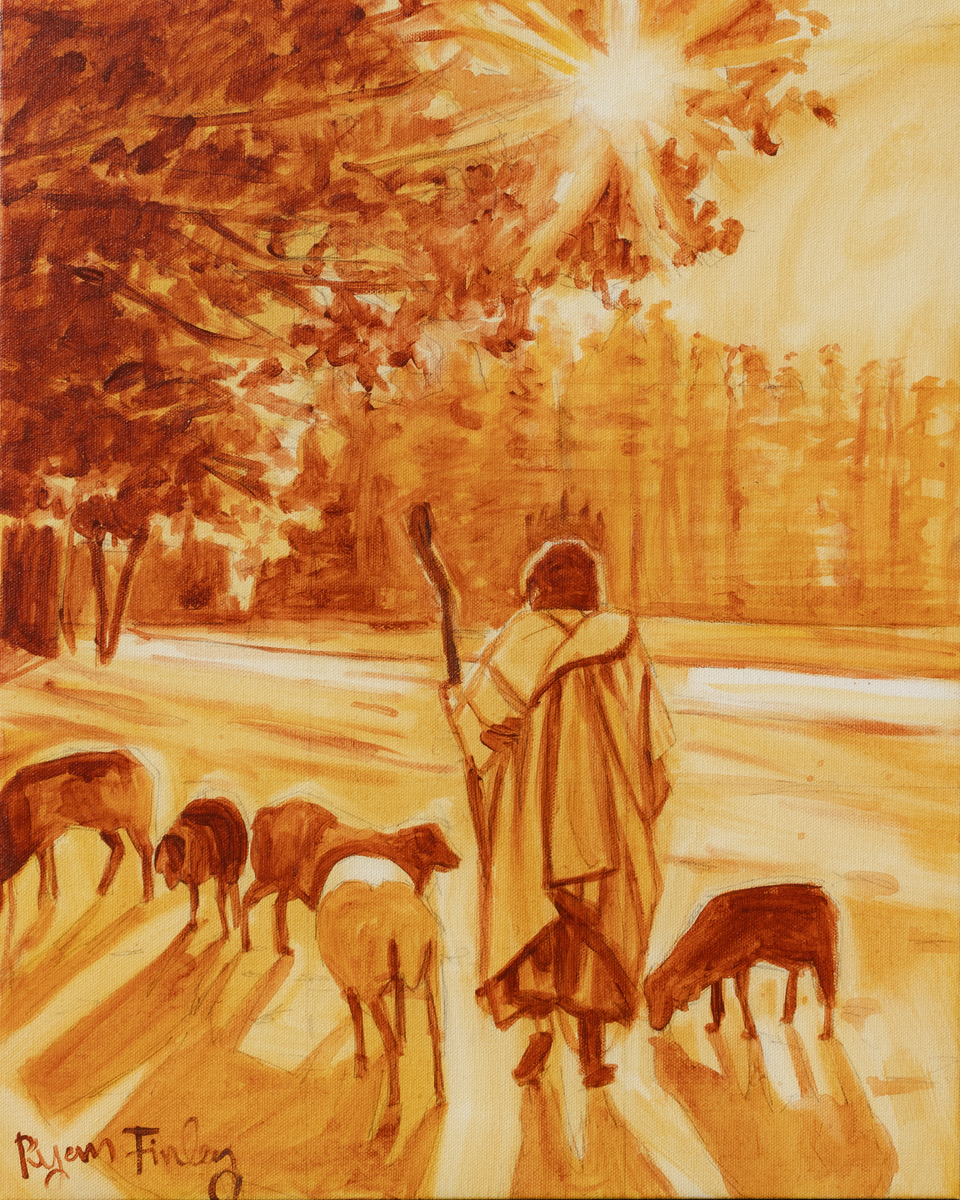
Jesus is mocked (Mark 15:16-20) And the soldiers led him away inside the palace (that is, the governor’s headquarters), and they called together the whole battalion. And they clothed him in a purple cloak, and twisting together a crown of thorns, they put it on him. And they began to salute him, “Hail, King of the Jews!” And they were striking his head with a reed and spitting on him and kneeling down in homage to him. And when they had mocked him, they stripped him of the purple cloak and put his own clothes on him. And they led him out to crucify him.
Like a painting that reveals its meaning only over time, God’s plan unfolds in ways that often defy our expectations.
This first piece is the underpainting—it’s the foundation and the starting point for what’s to come. From a technical standpoint, artists usually choose warm colors like orange, gold, or red for underpaintings to set the tone for the rest of the piece, so that even if bits of the first layer show through, it’ll feel warm and lively.
From a creative standpoint, I chose this gold to symbolize royalty. It’s all different shades of the same color, so we can’t fully tell what we’re looking at yet. We don’t know what kind of robes this man is wearing—are they rich and royal, like we might expect from a king?
What we know we do see is a regal figure: a staff in hand, and, if we look closely in the treeline…the suggestion of a crown. This painting is meant to represent the expectations people had of the Messiah– a powerful, triumphant ruler.
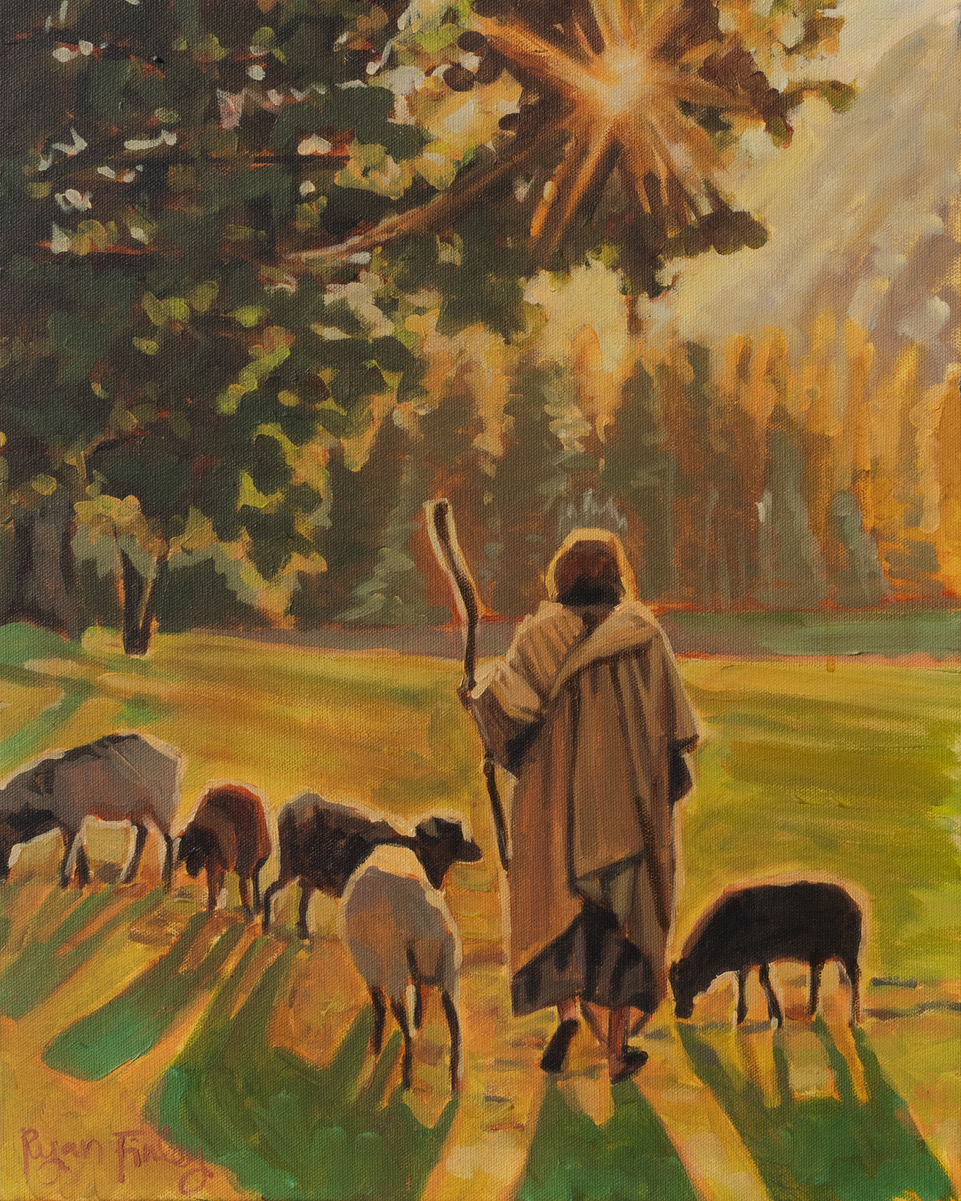
Jesus Takes Up His Cross (John 19.16-17: Luke 23.26) So the soldiers took Jesus, and he went out, bearing his own cross, to the place called the place of a skull, which in Aramaic is called Golgotha. And as they led him away, they seized one Simon of Cyrene, who was coming in from the country, and laid on him the cross, to carry it behind Jesus.
The painting is loose, a bit muddy, and definitely incomplete now…but the picture is becoming clearer. As viewers, we start to question what we thought we saw in the first piece. Is that crown…starting to disappear? His robes don’t look rich or regal after all…maybe they’re even sackcloth. And the staff in his hand doesn’t read like a king’s scepter anymore, but more like a shepherd’s staff.
I intentionally left the tree line in the distance incomplete, and we can see especially on the edges that I didn’t tidy up the details. Everything still seems to have the wash of gold over it, but now it almost makes the piece look muddy, not royal.
This piece is supposed to represent a shift. The expectations of a powerful king begin to fall away, and instead we start to see someone humble…carrying the weight of something much heavier than a crown
Jesus Is Nailed To The Cross (Luke 23.32-34, 39-43) Two others, who were criminals, were led away to be put to death with him. And when they came to the place that is called The Skull, there they crucified him, and the criminals, one on his right and one on his left. And Jesus said, “Father, forgive them, for they know not what they do.” And they cast lots to divide his garments…. One of the criminals who were hanged railed at him, saying, “Are you not the Christ? Save yourself and us!” But the other rebuked him, saying, “Do you not fear God, since you are under the same sentence of condemnation? And we indeed justly, for we are receiving the due reward of our deeds; but this man has done nothing wrong.” And he said, “Jesus, remember me when you come into your kingdom.” And he said to him, “Truly, I say to you, today you will be with me in paradise.”
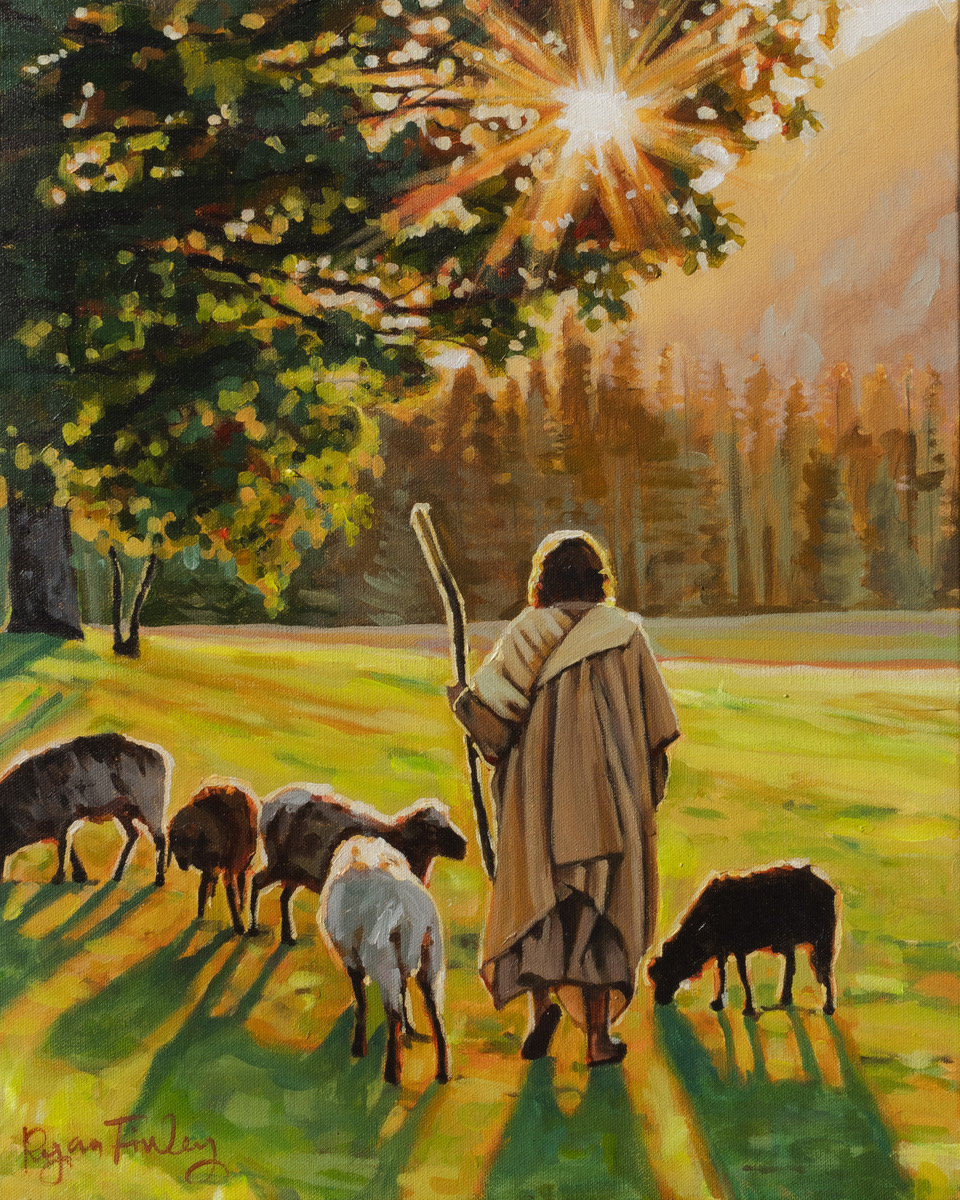
In this painting, I’ve refined everything—the light, the color, and the edges. The gold from the earlier layers is still under there, but now it’s been covered in the colors we’d see in real life, so it feels less like imagined something we have to fill in with our imagination and more like a picture we can just look at and rest in.
And here, we see it is finished. All the details are clear now, the colors are bright, and we can say with certainty that this figure is not a king as we once imagined, but a lowly shepherd. Humble, and gentle.
The staff is no longer a symbol of power, but of care. His robes are definitely plain and simple. And instead of ruling with distance and dominance, he walks closely with what he tends.